Listening to Wales: What You Told Us in Our Strategy Consultation
Thank you to everyone who took part in our Strategy 2026–2030 consultation. Over a 12-week period, we invited patients, carers, healthcare professionals, members of the public, and stakeholders from across Wales to share their views and experiences.

We received an outstanding response, with 2,353 submissions, including 1,384 completed surveys (1,369 in English and 15 in Welsh) and 969 partial responses.
Your views are invaluable and will help to inform our future priorities and actions.
Who Responded?
- Respondents included patients, unpaid carers, retired and current clinical staff, practice managers, dental professionals, care home staff, public-sector managers, local government representatives, advocacy organisations, disabled people, health boards and Trusts.
How We Gathered Feedback
- We used a bilingual online survey, in-person engagement events, email newsletters, and a social media campaign.
- Focus groups were held with Age Cymru, Fair Treatment for Women of Wales (FTWW), and the Birth Partner Project (BPP), ensuring the voices of older people, women, mothers, and families were heard.
What you told us
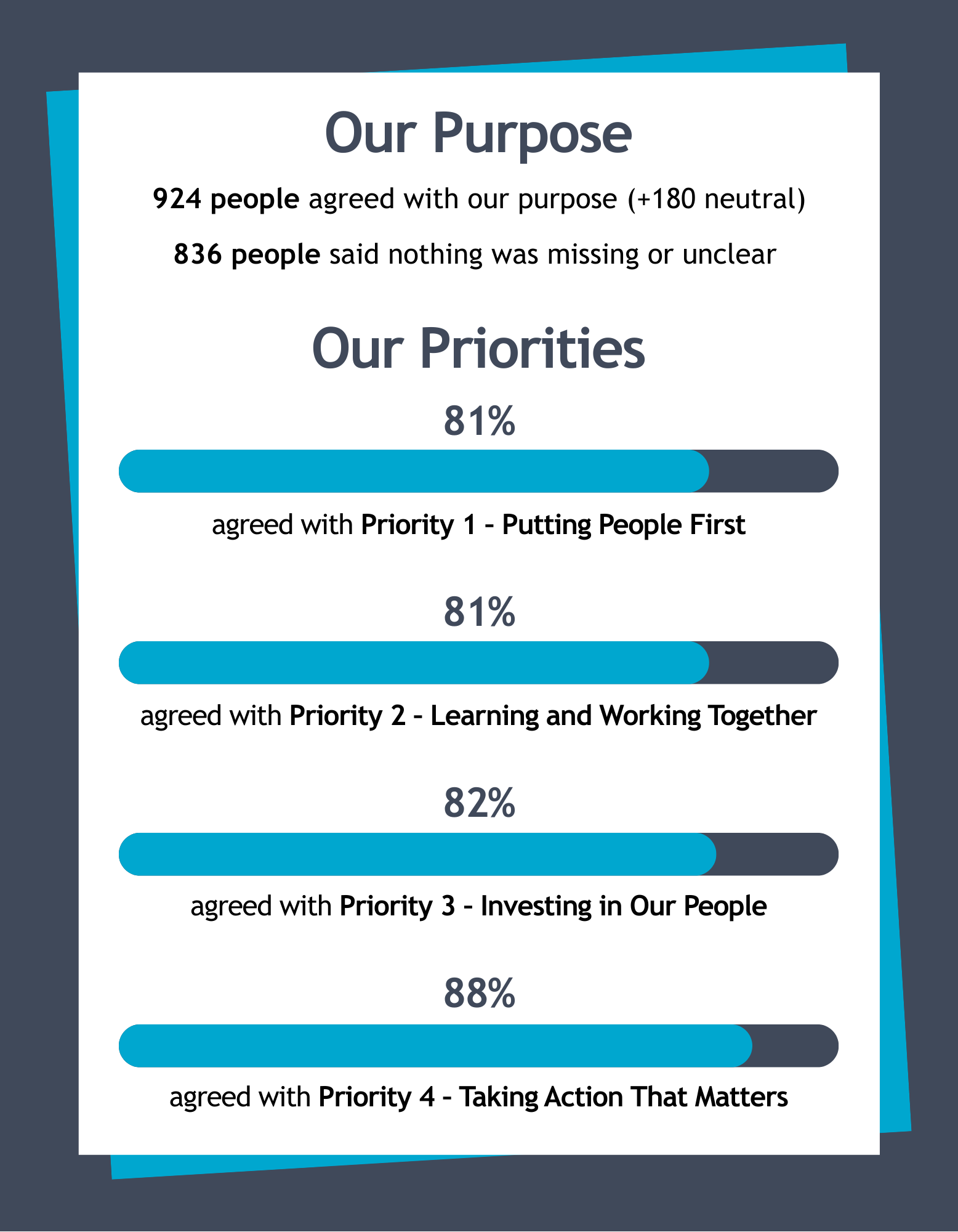
Our Purpose and Priorities
1. Access to Services
- Persistent difficulties securing GP appointments, long waiting times for diagnoses and referrals, and rural inequities (“postcode lottery”)
- Transport barriers, especially for elderly and vulnerable groups, further limit access
- Overloaded GP systems force reliance on emergency care due to gaps in planned services.
2. Quality and Safety of Care
- Variable standards across health boards, with particular concerns in emergency, inpatient, maternity, and mental health care
- Reports of patient safety issues, inadequate pain management, and lack of follow-up
- Staff shortages and burnout are impacting care quality and patient experience.
3. Communication and Coordination
- Poor information sharing between departments and providers; lack of shared digital records
- Conflicting guidance from GPs, hospitals, and 111 services
- Patients and families often feel uninformed about care plans, rights, and next steps.
4. Inclusion, Welsh Language, and Equity
- Insufficient proactive Welsh-language provision; bilingual workforce gaps
- Digital exclusion and interpreter shortages affect vulnerable people and ethnic minority groups
- Need for culturally sensitive care and better engagement with underrepresented communities.
5. Joined-Up Working
- Fragmentation across services and health boards affects continuity, discharge, and person-centred care
- Calls for integrated care models and improved collaboration between health, social care, and third sector organisations.
6. Trust, Accountability, and Engagement
- Widespread scepticism about whether feedback leads to change, lack of transparency and visible follow-up
- Desire for more meaningful engagement, clear feedback mechanisms, and accountability when mistakes occur
- Respondents want to be listened to, respected, and treated as individuals.
7. Workforce Wellbeing and Support
- Staff feel undervalued, unsupported, and affected by recruitment freezes
- Calls for continuous professional development, wellbeing support, and fair compensation
- Positive workplace culture is seen as crucial for retention and patient experience.
8. Mental Health and Women’s Health
- Limited mental health support, inadequate follow-up, and medication side-effect concerns
- Women’s health issues (e.g., menopause, endometriosis) and consent concerns require urgent attention.
9. Resource and Funding Constraints
- Underfunded services challenge the deliverability of strategic priorities
- Calls for funding models that follow the patient and support preventative/community-based care.
Next Steps
Your feedback has highlighted the issues that matter most when accessing healthcare in Wales. These insights are helping to shape our Strategy 2026–2030.
We will:
- Turn your feedback into action by building key themes, such as access, communication, inclusion and staff wellbeing into our strategic priorities and future assurance work.
- Strengthen how we use your insights to improve how we gather intelligence, listen to patient experience and work with NHS and independent providers.
- Share your feedback across the healthcare system so partners can use the findings to support improvement.
- Be clear on the actions we will take to deliver the strategy , when we publish our Strategy in April 2026, including how the consultation themes informed our priorities and actions.
Our Strategy 2026–2030 will be published on 1 April 2026, setting out our vision and priorities for the next four years.
Thank you once again for your time, honesty, and commitment to making healthcare better for everyone in Wales. We are grateful for your contribution.